Showing posts with label British. Show all posts

Tuesday, 28 October 2025

What Is An Englishman?

The English ethnic group traces its origins to 5th-century Germanic migrants who integrated with native Britons. Modern genetic studies confirm English people, first documented by Bede in 731 AD, are today 25-47% Anglo-Saxon.


England is named after the English ethnic group, not the other way around. An Englishman may move abroad and remain an Englishman, and a foreigner who moves to England does not thereby become English. English culture is defined by whatever ethnically English people do. English ethnicity is determined by heritage. If you descend from the medieval English people and were enculturated among their descendants in England, then you are ethnically and culturally English.

England was first united under one crown in 927 AD, which is 1,098 years ago. So England as a nation-state is over 1,000 years old, but England – that is, the land of the English – is much older.

The English were first defined as a native ethnic group in Britain by Bede in c. 731 AD. However, their ancestors, the Angles on the continent, are first described by the Roman historian Tacitus, who called them the 'Anglii' in 98 AD (and we cannot imagine that they did not exist before the Romans learned about them).

Not only do we have these written sources, making us one of the most historically well-attested, extant ethnic groups on Earth today, but we also have scientific evidence confirming the recordings of our origins first presented by the Venerable Bede and in the Anglo-Saxon Chronicle.

A combination of new genetic evidence, old archaeological evidence and a novel approach to the analysis of skull morphology (craniometry) have revealed what really happened in this obscure period of history, traditionally called the Dark Ages, to which we trace our ethnogenesis.

In the fifth century AD, large numbers of Germanic peoples from the continent migrated, in a seemingly coordinated way, to Britain. The initial impact on the Eastern part of the country has been estimated to indicate a population displacement of up to 75% according to a study of skulls (Plomp KA, et al, 2021) or a displacement of up to 80% according to genetic evidence (Gretzinger J, et al, 2022). There followed a period of integration as the English moved further West, causing formerly Brythonnic speaking natives either to adopt the Germanic language and culture of the English, or to flee to the Western fringes of the island where they became the Cornish and Welsh peoples. This integration with the natives resulted in a modern English population that was estimated to be 40% of Germanic origin and 60% Brythonic in a 2016 study (Schiffels S, et al, 2016). A larger and more conclusive study of ancient English DNA from 2022 estimates that modern English people range from 25-47% Anglo-Saxon (CNE), 11-57% Iron-age Briton (WBI), and 14-43% French. The ethnic English must therefore be modelled with three Iron-Age source populations, not just two, due to continuous immigration from France during the Middle Ages (Gretzinger J, et al, 2022). The variations in ancestral proportions reflect regional diversity within the English ethnic group, with Brythonic ancestry remaining higher in the West and Germanic ancestry being higher in Eastern and Central regions.

However, it must be understood that while the English are about 40% like the fifth century Germanic migrants (averaged across all regions, ignoring modern population density), they have a far greater genetic affinity to the English of the Middle and Late Anglo-Saxon periods, who had already assimilated the native Britons. The modern English genetic group existed in the Middle Anglo-Saxon era and by the time the term “Anglo-Saxon” was in use, the people who it referred to were almost entirely the same as modern ethnically English people.

The archaeological record includes one man of entirely native “Celtic” British ancestry (grave 37, Updown Eastry, Gretzinger et al 2022) interred along with weapons in a high-status pagan Germanic barrow – showing that the natives not only became English but were able to achieve high status within the Germanic English culture.

Another ancient pagan grave, including a cow sacrifice, was found at Oakington near Cambridge (grave 80, Gretzinger et al 2022) among a total of 124 inhumations. It contained a woman whose genetic ancestry has been determined to be around 60% native British and 40% Germanic invader – and this mix is much the same as that of the average Englishman today, even though the term 'English' did not yet exist when she was buried (Gretzinger et al 2022).

The terms 'English' and 'Anglo-Saxon' were synonyms. While 'English' was first recorded as an ethnonym by Bede around 731 AD, the term 'Anglo-Saxon' came a bit later when King Alfred the Great, formerly just King of the West Saxons, captured the Mercian-Anglian territory of London in 886 AD, and was thenceforth known as 'Rex AngulSaxonum'. Both terms continued to be used for the next two centuries. A 10th-century charter of King Eadwig describes him as “King of the Anglosu” – an abbreviation of 'Anglo-Saxonum' – and King Cnut sometimes used the title "King of the Anglo-Saxons" as recently as the 11th century.

After the Normans invaded in the 11th century, they referred to the natives as 'Engleis' and in so doing recognised their distinct ethnic identity. The Normans brought an end to the so-called Anglo-Saxon era, but not to Englishness. Neighbours on the continent referred to the English then, and still do, with names derived from Angle such as “Anglais” while Celtic speaking British neighbours refer to the English as “Sassenach” - a word derived from Saxon.

Nor were Anglo-Saxon origins of the English forgotten at home. Henry of Huntingdon’s Historia Anglorum, published around 1129, relied on Anglo-Saxon texts to tell a history of England. Henry there coined the expression Anglia plena jocis, “England full of jokes”, a phrase which may be the origin of the “Merry old England" trope - a nostalgia for an England which has been lost, widely regarded as a central component of English culture, at least since the Industrial Revolution.

In 1215, a history of Britain was written called Layamon's Brut - which, while including a number of Norman words, deliberately employs archaic Anglo-Saxon vocabulary.

Around 1400, Chaucer’s Canterbury Tales invoked pre-Norman English figures such as the Germanic water god Wade. An anonymously authored poem from the late 14th century titled ‘Athelston’ is set in Anglo-Saxon England and seems to be about Alfred’s grandson, King Aethelstan of the Anglo-Saxons.

The word 'Anglo-Saxon' reappears along with a renewed interest in the early English past in the mid-16th century – motivated by an awakening Protestant national consciousness seeking to define itself in opposition to the Catholic South which did not share their Germanic ancestry. Consequently, Englishness and its Anglo-Saxon origins, became associated with an imagined liberty of pre-Norman governance.

In the 17th century, Gerrard Winstanley, one of the leaders of the radical dissidents known as The Diggers, wrote:

“O what mighty Delusion, do you, who are the powers of England live in! That while you pretend to throw down that Norman yoke, and Babylonish power, and have promised to make the groaning people of England a Free People; yet you still lift up that Norman yoke, and slavish Tyranny, and holds the People as much in bondage, as the Bastard Conquerour himself, and his Councel of War.”

(Winstanley, Gerrard, The True Levellers Standard Advanced: Or, the State of Community Opened, and Presented to the Sons of Men (London: [n.pub.], 1649)

For the last 500 years, this English identity has repeatedly relied on an Anglo-Saxon origin to define itself. But since the two world wars, the word “Germanic” has had negative connotations associated with a national enemy and so some, such as Francis Pryor, have attempted to manufacture an imagined “Celtic” origin for the English instead (In his BBC series Britain AD (2004) and Britain BC (2003), and his books, Pryor proposes a continuity model: major cultural transformations in Britain (like the transition to Anglo-Saxon England) occurred through gradual internal development and cultural exchange).

Certainly, the genetic evidence demonstrates that the English are not entirely descended from Germanic migrants. But the Iron-Age Britons themselves were not entirely descended from Celtic migrants either. The genetic history of the British Isles over the last 4400 years is characterised by long periods of stability interspersed with mixing events with closely related peoples.

This infographic illustrates the last 12,000 years of Britain’s genetic heritage.


The blue in the above diagram represents the Western Hunter-Gatherers like Cheddar man, from whom we still descend in part, but who were largely displaced by the first farmers 6000 years ago, represented by the green. It was this second group who built the megalithic monuments such as Stonehenge. Then, around 4400 years ago, the Bell Beaker folk arrived from the Netherlands and hastened the Bronze Age. This was the largest population displacement in the history of Britain, with some 90% of the Neolithic people being displaced in just a few generations (Olade I, et al 2018). The Beaker folk introduced Western Steppe Herder ancestry from Ukraine/South Russia, represented on the graphic by orange, and which is associated with the Indo-European language family to which both Brythonic (Celtic) and English (Germanic) belong. This was the last genetic component of the three prehistoric peoples who constitute the populations ancestral to the English. However, the Beaker folk were also already mixed with the same farmers and hunters that were previously present in Britain, which is why the orange on the graphic does not show the full 90% displacement.

Migrations of Celts in the Late Bronze Age (Patterson N, et al 2022), Anglo-Saxons in the Dark Ages and French people in the Middle Ages (Gretzinger J, et al, 2022) did not introduce any new prehistoric ancestry to the island. They merely altered the proportions of the three pre-existing ancestral components, as the graphic demonstrates. The nearly four centuries of Roman occupation, surprisingly, left no genetic legacy in the native gene pool (Martiniano R, et al 2016). Therefore the alleged diversity of Roman Britain has no relevance to the identity of English people today. It is also important to note that the Anglo-Saxons were already closely related to the Iron Age-Britons before they mixed together, both being indigenous North-West European peoples descended from the Bell Beaker folk, Neolithic farmers and hunter-gatherers.

While the roots of the English nation, ethnicity and language are tied to the Germanic invaders of the fifth century, the English ethnic group have much deeper ancestral ties to Great Britain. Via the Britons who mixed with the Saxons, the English people descend from the Bronze Age Beaker folk, the first Neolithic farmers and even the hunter gatherers who collected shellfish on these shores over 10,000 years ago when Britain was not yet an island. The English share in the deep Celtic ancestry of their Welsh and Scottish neighbours, but are also distinguished by a unique connection to Germanic Europe.

This article was originally written for The Restorationist in June 2025


Thursday, 1 August 2013

Documentary: Anglo-Saxon Paganism


This is the teaser trailer for an upcoming film on Anglo-Saxon paganism that I am making called From Runes to Ruins. The film is still in production, but will explain how the paganism of our ancestors lives on the landscape and the people. There are landmarks, place names and aspects of our language which are remnants of Anglo-Saxon paganism. It is from Woden, the god of war, that we take the name for the third day of the week, Wednesday (Woden’s day).

There are features of the landscape that take us right back to pagan times and give us insight into how people used to think. Burial mounds such as Cwichelm's barrow in Oxfordshire were thought to be haunted by the ghosts of the dead warriors they contained. Further up the Ridgeway is 'Wayland's smithy', a Neolithic long barrow which the Anglo-Saxons believed was built by Wayland, the blacksmith of the gods.

Despite the significance of Anglo-Saxon paganism to the history of Britain, no one has ever made a documentary exclusively on this subject. Until now.

Edit 2020: the film is now available to watch online for free

Monday, 4 February 2013

Heathens and Horses

The recent horse meat scandal involving tescos burgers has got people wondering why the English don't eat horses anyway. I covered this subject in my recent dissertation. The answer is to do with paganism. The Catholic church realised that eating horse meat was connected to pagan rites in the North of Europe, rites associated with gods like Odin, Thor and Freyr, so they banned it.

Riding To The Afterlife: The Role Of Horses In Early Medieval North-Western. Europe.


Thursday, 4 October 2012

The Seafarer

The Seafarer is an evocative Anglo-Saxon poem which begins with a mariner lamenting his fate but develops into an existential reflection of life and humanity. Here is an artistic reading of the poem in translation by Burton Raffe involving an angry cellist.


 This video I made begins with a reading of the first 25 lines of Ezra Pound's translation, followed by the original Anglo-Saxon Old English.


Wednesday, 21 July 2010

British Folks


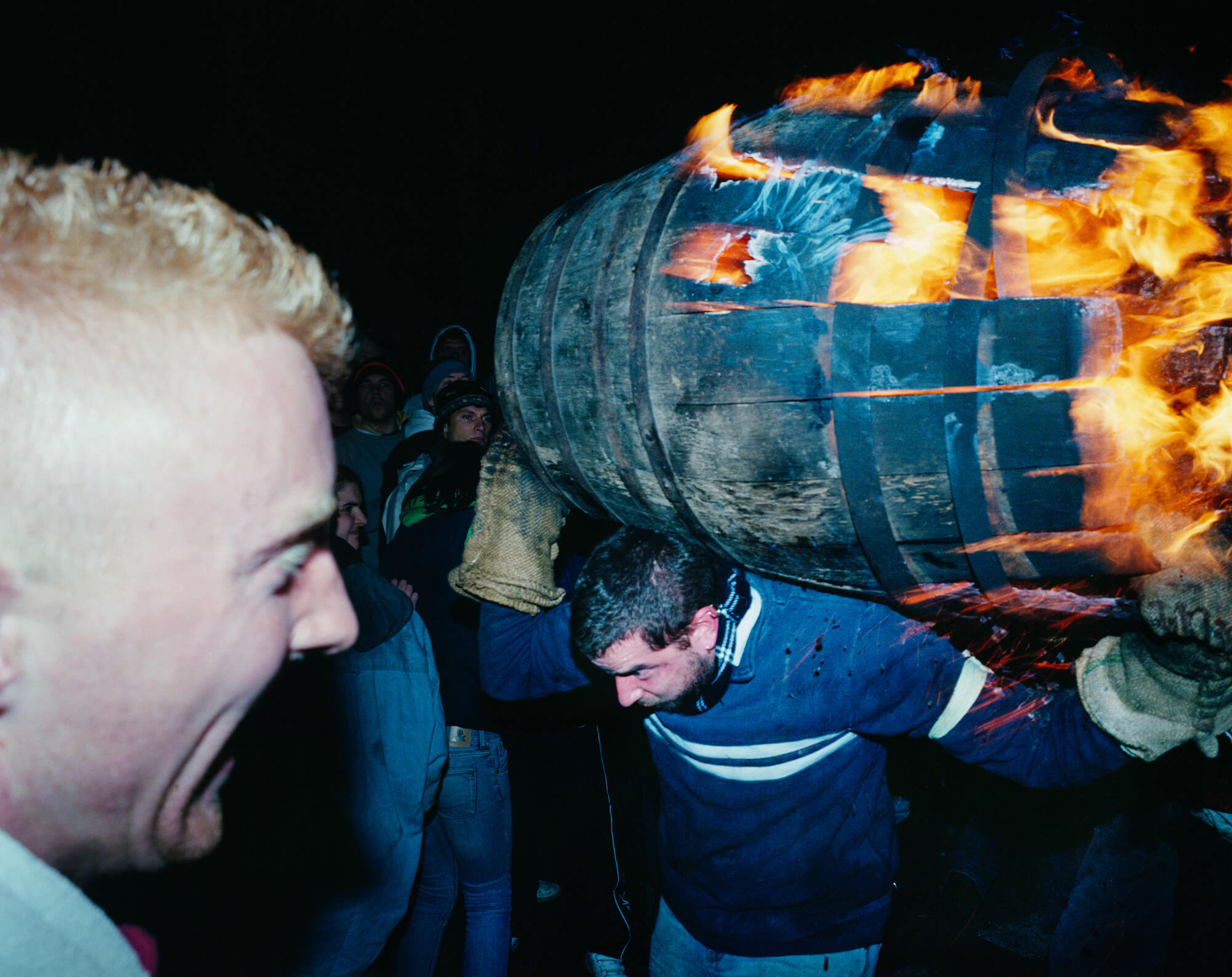
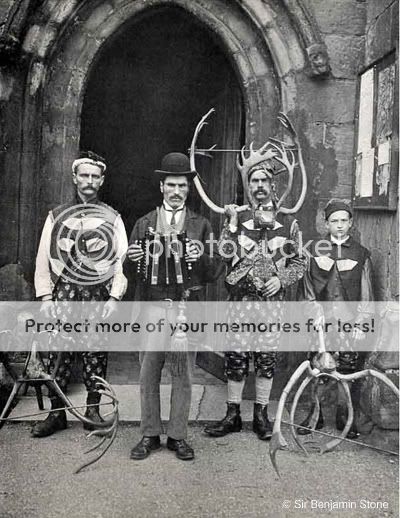
Photographer James Pearson Howes has created this ongoing project, focusing on the people who take part in the many strange and colourful folk events that are still held throughout Britain. The final project will take the form of three small limited edition hand bound books.

Wednesday, 26 May 2010

Folklore on Tour - Simon Costin


Most countries in Europe have places where they celebrate their bizarre old traditions. But Britain, despite its rich history, has no properly funded institution where people can research and celebrate our native traditions and vernacular arts.

Simon Costin is a remarkable individual who has devoted his life to the accumulation of information and artefacts relating to ancient rites and festivals that occur around these isles every year, some of which are centuries old.

"I intend to establish a permanent collection and national exhibition centre that celebrates and promotes the Folk Culture of the British Isles" he claims. But for now, his museum is on the road. He takes his caravan of artefacts and books around the country to various village fetes in an effort to spread information about these fascinating traditions before they are lost.

pagans


Why is it Britain doesn't already have a museum of folklore?

Simon: I suspect there are a number of reasons for our not having any kind of permanent research facility here in the UK. Firstly, the very subject of folklore is perhaps a difficult one to be represented within a museum context. It would come under the heading of 'Intangible Heritage'.
There are very few objects or representative artefacts associated with our annual customs that are not either still in use or that are only constructed for the duration of the event and are then destroyed. Things such as the figure of the Jack from May Day's Jack in the Green, Well Dressing's, Garlands, Lewes Bonfire figures, Punkie Day carved turnips etc, all only exist while the festival is happening. This presents a problem for museums. Should the objects themselves be sourced and preserved in some way? Is there legitimacy if replicas are being made?
So there is a problem from a curatorial point of view as to the kinds of objects that can and should be displayed. This may have discouraged people from tackling the subject in the past.
Another reason could be the way the media has trivialised folk customs in the press, only choosing to highlight the nation's ambivalent attitude towards Morris dancing, or reporting on the casualties of cheese rolling for instance. There have been very few in depth reports, possibly because lazy journalists find it easier to ridicule than study.


Do you think that interest in folklore is tainted by political associations?

Simon: Recently, far right groups such as the BNP, have taken to selling the CD's of various folk musicians at their meetings and attaching spurious meanings to 'Traditional' British songs. This has prompted the formation of a group called Folk Against Fascism which has gained a strong following within the folk community, who are keen to point out that they have absolutely nothing in common with the ideology of the far right.


That the playing of traditional music should be co-opted by a group such as the BNP is of no surprise and it could be argued that in Britain today, anything deemed to be a celebration of certain parts of the UK's national culture has been tainted by the far right, to the point where even the word 'British' carries negative undertows. That can be said of any national symbols which become corrupted by political groups. 
Folklore is something that is created by the people living in a specific culture and is a universal phenomena with many cross overs with other nationalities. After all, it deals with universal themes; the coming of summer and the beginning of winter, celebrations of life and memorials for the dead. The origins of that most British dance form, the Morris, are thought to have derived from the Morrish dances of North Africa. St. George was possibly a Roman or a Turkish solider who never even visited the UK. Small minded political groups who would deny this world view do so by showing their ignorance and intolerance.

*Note from STJ - Simon may not be aware that St. George was a Greek speaking Roman born 1000 years before the Turks conquered Byzantium! He was NOT Turkish! Also the theory that Morris dancing is based on dances of the Moors is not proven and is based only on the fact the words look similar. Even if the word Morris is derived from the word Moorish, that is not necessarily because the dances are related, and may be because the dance is based on a Spanish dance after the Reconquista, which celebrated the eviction of Moors from Europe...or the words may be unrelated entirely!


How is folklore relevant to British people today?

Simon: Folklore can be said to be a body of traditional belief, custom, and expression, handed down largely by word of mouth and circulating mostly outside of commercial and academic means of communication and instruction. Every group bound together by common interests and purposes, whether educated or uneducated, rural or urban, possesses a body of traditions which may be called its folklore.
Folklore is reflected in everything from the names we bear from birth to the names of our local pub; The Green Man for instance. Folklore is the slang we use, the secret languages of gangs from school children to guilds and masonic groups. It is the shaping of everyday experiences in stories swapped around the kitchen table or told on blog sites. Folklore can be a roadside shrine to commemorate a killed pedestrian or the massive public display formed when Princess Diana died. Folklore is the cry of fox-hunters as they ride across a field and the weather lore of a farmer. It is scrawled on urban landscapes by graffiti artists or woven into the fabric of churches, mosques and temples. Folklore is community life and values, artfully expressed in myriad forms and interactions. Universal, diverse and enduring, it enriches the country and makes us a commonwealth of cultures.

What is your favourite custom/legend in British folklore?

There are far too many to mention but some of my personal favourite customs would have to be Padstow on May Day, the Hastings Jack in the Green Festival, the Barrel Burning in Ottery St. Mary and Lewes Bonfire.


Can you tell us one of the most unusual things you have encountered while touring?

There was nothing particularly unusual as such but certainly one of the most heart warming was the huge amount of support the project was shown from the many thousands of people who visited the caravan and the way that everybody said the same thing, 'Why is it that British people don't seem to value their native customs and traditions like other people in Europe do?'


So what plans do you have for the museum in 2010?

I'm planning a series of mini museum exhibitions which would ideally be situated in various houses which are open to the public. The first will be at Port Eliot in Cornwall, where they have the Lit Fest in August. Each show will deal with the folklore of the region and take one or two of the festivals which take part in that area and look at their history and development.

Then at the end of May, opening on the 29th, is an exhibition featuring work by the various artists who have been involved with the museum project to date such as Jonny Hannah, Mark Hearld, Clare Curtis, Riitta Ikonen, Tamsin Abbot etc. This will be at the Hexham Art Gallery for the Folkworks Hexham Gathering.

The caravan will be appearing at the Ditchling Fair on the 19th June.

There's to be a big folk concert in mid October probably at the Union Chapel although this has yet to be sorted out. This will be done under the museums music umbrella.

There are also going to be a series of mini museum exhibitions opening across the UK, the first being at Port Eliot in Cornwall on 3rd April. Then there's an art show at the Hexham Gallery on May 29th which runs for a month. The caravan will be making an appearance at the Ditchling Festival and the Compton Verney Summer weekend. In October there will be a large concert to raise awareness of the project in London.

Check out The Museum of British Folklore website to learn more

http://museumofbritishfolklore.com

Thursday, 8 April 2010

Folkin' Around

A cloaked man punches a woman in the face while a naked guy reaches to look up her dress


I am highly amused by old English folk music.


 The lyrics of this folk song tell of a man fixated on a woman, then it tells of a fox being chased by hounds into a churchyard where it disrupts a Protestant wedding by upsetting a parson. Then the singer starts talking about respecting the military and finally he freely admits that the song has no meaning. All of this is interwoven with references to his fixation on a woman named Nancy. WTF?


This song was written in Elizabethan times. In case you can't guess from the revolting lyrics, Watkin's ale means semen. The song tells of how women who partake of too much, become old and ugly before their years. It's kind of the nearest thing they had to those chlamydia adverts we see on tv nowadays.


Reblog this post [with Zemanta]

Thursday, 4 March 2010

Street Rock

Street rock is a term that is rarely used as it actually describes bands that span across several genres. The term was first used to describe British pub rock bands at the tail end of the Glam rock phenomenon and was used in the seventies to refer both to glam rock bands like Slade and to pub bands like Dr.Feelgood who were influenced by the Beat groups of the Sixties such as The Who. Later the term was used to describe pre-punk bands like Slaughter and the Dogs and Cock Sparrer. Eventually the term was replaced by the more widely known Oi!, a definition coined by the universally hated Sun journalist Garry Bushell, in reference to a song by The Cockney Rejects. Compiled here are some videos of Street Rock bands from the 70's and 80's for your amusement.


Tuesday, 9 February 2010

Friday, 24 October 2008

The 16th Raindance Film Festival Review

The Rain Dance film Festival had it's 16th year this month, and as usual it was host to an international selection of challenging independent cinema. I interviewed festival organiser Elliot Grove, a couple of directors and have reviewed a few of this years offerings. Enjoy!


Hi Elliot, you must be very busy this year! What have you enjoyed most at this year’s festival?


Elliot: The big story this year is the attendees, the box office is up 40% which is astounding, and having done it for so many years it’s gratifying to see that people are finally getting out to find us, which proves that independent cinema is alive and well! Very much so!

So you think the future is bright for independent film And British cinema?

Elliot: Yeah, independent cinema is not for everyone, but it is definitely for people who want something a little different from the normal Hollywood fare, that you get at the multiplexes and the normal fare that you get at other film festivals. Our programming is much more underground and extreme than you’ll see elsewhere, certainly more extreme than you’ll see in the multiplexes.

Could you possibly pick a favourite?

Elliot: I don’t like picking favourites because all the films are favourites, but there is something that’s happened this year which is a bit different, there were three excellent films from Canada, one is ‘production office’, another is ‘Who is KK Downing’ a hilarious comedy and the actors are coming over, this is a comedy troupe from Montreal that feed into second city, the stand up club in Toronto which feeds all the big names to TV show Saturday night live, and is the route taken by all the big people like Jim Carey, Dan Akroyd, Martin Short, Mike Myers and so on so that film is great. And on Sunday Jeremy Podeswa, the great auteur, is attending with a film called ‘Fugitive Pieces’ which is a harrowing account of the holocaust, so those are all very different films, but I would heartily recommend any one of them to anyone, they have to be my personal favourites because I’m Canadian!

Congratulations on receiving the honorary doctorate, what kind of people do you think most benefit from your lectures?


Elliot: Anyone who wants to write a film, make a film or direct a film.


What will your next film be about?


Elliot: I’ve put all that aside for the past year while I’m working on the launch of raindance.tv our web distribution portal, so none right at the moment although I have some ideas, but I don’t really want to talk about them.

What things will be different at next year’s festival?

Elliot: I think what will be different is, we’ll have to address our infrastructure because we just can’t cope with all the people wanting to come, most things are sold out and people are damned lucky, if they don’t already have a ticket, to get a ticket which is unfortunate. So what we’re trying to do now is to address that issue and see if we can get larger screens and make the wonderful films we have from all over the world available to an even wider audience.

Did your Amish background affect your style of film making or your attitude to cinema in general?

Elliot: Yes and no, no in the sense that cinema and acting are my natural topics, but the yes is as a child I was exposed to all the story telling that you do in my community, that certainly affected the way I look at films, from a storytelling point of view, I love great stories, and the fact that there’s cinema means everything I grew up with has been enhanced. The storytelling I grew up with has made me particularly receptive to the visual storytelling of cinema, and wow! What a great way to tell stories.

You have a lot of contacts in the film industry but can you still get star struck?

Elliot: Yes, every time. Faye Dunaway came, on the one hand, I’m able to speak to her as I’m speaking to you now on the other hand I’m pinching myself thinking can this be real? I’m having dinner with Faye Dunaway, like wow! Its quite an experience that, in itself. And taking her through all the paparazzi and seeing all the pulling power she has, the pulling power that Adam Yauch of the beastie boys has, that Peter Greenaway, that Michael Winterbottom, that Bill Nighy, that Liz Smith the wonderful actress, that they have. They can do something that I can not, and I am forever in awe and respect of them. It’s a bit like going to the private show that Prince was doing at the O2, where he would play after the main show for 4 hours, he had done an energetic 2 hour set for 20,000 and then going with a few people and playing for 3 or 4 hours, My god, that’s something special. How does he do that? How does she do it? Amazing.


Heavy Load – Jerry Rothwell

A documentary film about a punk rock band from Lewes near Brighton called Heavy Load, the majority of it's members are disabled. The film begins with the director explaining his depression and shows how he uses the optimism and perceived happiness of the band as a vehicle to pull himself out of his misery, but as the film progresses and the band run into problems, he wonders whether by making the documentary he is taking away from their happiness. The band starts off playing only at disabled events, then progress to pubs and finish by playing at a festival alongside the Levellers and the fun lovin’ criminals. The disabled members of the band are very likeable and although the film is in no way patronising, it is slightly too sentimental for my tastes, and seems somewhat self serving, drawing no conclusions about the lives of the subject matter only that of the director. The drummer Michael’s expanding ego is one of the most entertaining aspects of the film, despite having barely mastered the drums after decades of playing, he becomes convinced he is too good for the band and threatens to start a new one. The director covers the subject skilfully and with sensitivity, he also uses the Sussex coastline to great atmospheric effect, ultimately this is no better than a feel good TV documentary about what strong little soldiers disabled people are.

The Blue Tower- Smita Bhide


The Blue Tower is this year’s winner of best UK feature at the Rain dance film festival. What I presumed to be a straight forward inter-racial romance story set in Southall, is in fact so much more as producer Jamie Nuttgens explained to me “the romance isn’t problematic like Romeo and Juliet.” In fact the sexual relationship the protagonist Mohan (Abhin Galeya) has with his wealthy aunt’s white care worker Judy is in fact the only thing that doesn’t directly create problems for him in this film, His wife is distant and unfaithful and her family particularly her brother do not respect him because he has no job and has not yet fathered a child, his mates are chancers trying their luck at get rich quick schemes and he is hoping desperately that another unreliable friend will come through for him with a job. His wealthy aunt doesn’t suspect her nephew and care worker of anything, even when they start stealing from her; she is too concerned with her vanity, which is exasperated by her creepy sycophantic neighbours and their plans to take her money. To escape from the mess of his life, he and Judy conceive a desperate plan. As his marriage and hopes of work look more and more bleak, Mohan becomes delusional and desperate, Director Smita Bhide skilfully uses the prominent red and blue towers that dominate the landscape of Southall as symbols of the security of Mohan's life and the menacing reality that lies behind the illusion.

The symbolism of the blue and red towers is very striking, where did you get the idea from?

Smita: When we were scouting the locations, looking for interesting landmarks, I just noticed them; they were sort of organically integrated into the plot. They are such amazing structures that we couldn’t really film there and not include them somehow. The shot where the blue tower emerges from behind the red tower is how it actually is, and that’s how that came about.


And was a lot of the plot developed organically in this way?


Smita: Well some of it was, I had an idea that we should make a short story featuring the three main characters, and I wanted to set it in Southall because that’s a place I know quite well. We wanted to make something that was set in that kind of Indian landscape, that’s also very suburban.

By the three main characters do you mean the lovers and the auntie?

Smita: Yes, I had a story that revolves around that, a bit like the Honeymooners, I love that 1950’s feeling.

So the secondary characters were developed later?

Smita: Yes, I wanted to expand Mohan’s life, to explain why he is the way he is, and why he is so protective of the old woman. Both of the other themes developed from this.

Is Mohan your favourite character in the film?

Smita: I really like Judy, she’s the one that I think is most interesting. In fact we had much more storyline involving her, but when we were editing, it was too long, and we ended up having to focus more on Mohan. Alice O’ Connell was brilliant as her, I think she was the character with the most layers.


Did Alice bring a lot of that to the character, or was this already created in your writing?


Smita: Well I wrote the part very much with Alice in mind, it’s such a shame more of the scenes with her in weren’t included, but you have to be discriminating when editing.


Who is KK Downey? – Darren Curtis


A Canadian comedy critique of the easily deceived, attention seeking hipster culture. The story concerns two failing creative artists, a musician whose band is laughable and a writer who can’t get his book ‘truck stop hustler’ about a drug addled trans-gendered prostitute, published on the grounds that he is too middle class to release such material. Together they create a fictional character named KK Downey who is presented as the author of the novel, but things go a bit pear shaped when their web of lies comes unstuck. The film is a hilarious spoof of the artistic and creative youth community that is done in an original and at times surreal way with all too familiar characters who despite their hopelessness are very endearing. There is a lot of very basic and vulgar humour, but the film never pretends to be anything it isn’t, taking the piss out of pretentious indie types rather than trying to entertain them.


Flick – David Howard


A rockabilly zombie comedy bonanza. The plot is feeble at times, and the character’s motivation unconvincing but the flawless style of the movie more than makes up for it, including the teddy boy clothing, zombie gore and classic comic book style framing with actual illustrated comic panels used in place of montages for the plot links. The cast is also very impressive including the Oscar winning Faye Dunaway as Lieutenant McKenzie , the one armed American cop partnered with detective sergeant Miller played by Mark Benton (The fat bloke from the Northern Rock ads) who had her flown in to catch a rockabilly serial killer in the dark decrepit environment of a modern Welsh city which lends itself well to the horror genre. There are some great one-liners and amusing Monty pythonesque blood squirting wounds that provide the comic relief from the rampaging zombie teddy boy murderer Johnny Taylor, whose insane mother played by Liz Smith (Royle Family) is the best part of the film.

Hollywood star Faye said she was happy to work on what she described as an innovative film, saying “I was very taken with this little piece, it was an honour to work with all of them.” Mark Benton added “I think Faye learned a lot from me.” Despite not yet acquiring a distribution deal, Director David Howard has high hopes for the film, saying “hopefully it’ll get a cult following!” I asked him where he got the inspiration to draw together the different elements that gave the film it’s style, he replied “We were aiming for a B-movie feel, also a comic book feel in terms of the framed sequences. I already had an idea to make a low-budget movie, then I heard ‘Teenager in love’ on the radio and I thought about killing a man in a record shop, as well as that song things like Roger Corman, American International pictures and all those B-movies that have enduring appeal and an innocence which I think is appealing, I also love David Lynch and Alfred Hitchcock!”

Watch Out - Steve Balderson


Disturbing comedy about loveless self obsessed narcissist who is looking for work as a lecturer at a small town college, it features a hilarious scene where he tapes a picture of his own face on a blow up doll then fucks it. The subject is compelling and the parts with dialogue somewhat intriguing, but the film is mostly comprised of shocking yet tedious sequences showing the protagonist masturbating. The violent ending is somewhat predictable but quite satisfying; I think the whole film could do with being cut down by ditching a few of the numerous wanking scenes. The subject of a cold, almost inhuman narcissist who reads German philosophy and hates humanity is somehow compelling, but not enough to endure this very boring film.


Mao-ce-dun – Besnik Bisha

An endearing comedy about a roma gypsy named Hekuran who lives on a gypsy camp in Albania during the reign of the 1970’s communist government, he names his ninth child Mao-ce-dun, at first he is met with anger by the party as it is not a conventional Albanian name, but after he writes to the Chinese embassy, they show an interest and the party, eager to maintain a good relationship with China, award Hekuran with luxuries he has never before experienced. He learns to manipulate the party, but takes a greater interest in communism as the film develops, it is never clear whether he is manipulating the party for his own means, or he has just misunderstood the way communism works and merely wants to be a functioning member of communist society. By bringing his family into the world of politics, he puts himself and the security of his gypsy community in danger. Not just a critique of communism but also of hypocrisy and international political relations in general. The simple characters are easy to love, and their uncertain future weighs heavy on the mind of the audience, but the ending is unremarkable, unskilfully portrayed and would have benefited from a different pace of editing, or perhaps a different final scene.


Adrift in Tokyo
– Miki Satoshi

Adrift in Tokyo is a heart warming comic drama about luck, a common theme in Japanese cinema, but interesting nonetheless. The film’s protagonist Takemura is a law student with a debt to pay off, a debt collector named Fukuhara who visits his house and threatens him, offers him a way out, all he has to do is walk the streets with him. The untrusting relationship changes as the two learn more about each other, it has the feel of a road movie, with the friendship developing between the two men, with the underlying theme of luck shaping their futures, Fukuhara lost his child and Takemura was abandoned by his parents as a child, they end up posing as Father and son and gradually Takemura realises his luck is changing. This sentimental and somewhat obvious male-bonding plot is held aloft by hilarious secondary characters, unlikely comic scenarios and the beautiful cinematography that captures the full range of Tokyo’s landscape and atmosphere. Uplifting, thought provoking and at times very amusing.


The Daisy Chain
– Aisling Walsh

Female directors are too rare, particularly those willing to approach the horror genre. Walsh uses the beautiful Western Irish coast to create a bleak atmosphere of isolation and vulnerability. The plot is somewhat obvious, a young couple move away from the bright lights of London to raise a family, the wife is pregnant, and the husband has inherited his childhood home in Ireland, but the neighbour’s child Daisy is suspected of being a fairy changeling, born in a fairy ring on Halloween. The Neighbour’s son is killed under mysterious circumstances and the parents are soon to follow, the child is then adopted by the London couple, the motivation for this aspect of the plot is addressed but remains unconvincing. The superstitious locals become increasingly scared of young Daisy. The film lacks originality but has some redeeming qualities, the child actress Mhairi Anderson who plays Daisy is exceptional, providing a genuinely disturbing performance, the cinematography and score combine to give the film a unique character that is tense and engaging. The theme of fairies and the supernatural remains frustratingly unresolved, it is never made clear whether the girl suffers from autism, is very disturbed or is really a fairy changeling, a question left unanswered deliberately by the director, but in a clumsy way, that doesn’t encourage the audience to feel sympathy for the girl, who is properly identified neither as victim nor as aggressor. Despite the flaws The Daisy Chain, a combination of Straw Dogs and the Wicker Man, is a visually appealing and at times moving addition to the horror genre.

Fine, Totally Fine – Yosuke Fujita


This is a delicate Japanese comedy about how life can be disappointing, it features three main characters approaching 30, none of whom are satisfied with their lives. A nervous, shy girl with an unusual affection for fish sausages who aspires to be an artist but is too clumsy to hold down a job, a hospital manager who never confronts anybody and commands no respect because he is always trying to be nice out of fear that people won’t like him and the most compelling and amusing of all Teruo an obtuse, sadistic but dim-witted part time park keeper who likes scaring kids and dreams of one day building a super-ultra-haunted-house-deluxe, which will literally scare people to death. There is a brief sub-plot where the two men compete for the affections of the girl, but this is never resolved as she finds love with another man. None of their dreams are realised, and there are no scenes where emotional or hopes are addressed, or aspirations resolved. This is not a fantasy film, but a film about fantasy, and it’s stark contrast to reality. The film is charming, set predominantly in a second hand book shop belonging to Teruo’s father, despite the lack of a conventionally satisfying plot resolution; there is a poignant message about the pleasure that can be taken simply by enjoying each other’s company and being thankful for it.

The Tour – Goran Markovic

Based on Markovic’s award winning play of the same name, his anti-war comedy is a film about a group of failing actors living in Belgrade in 1993, depressed and drunk. They embark on a reluctant tour to the frontlines to perform for the Serbian soldiers, but they are constantly manipulated by different forces of the Bosnian war, over the course of the film they perform and socialise with doctors, writers, generals, Serbian soldiers, Croats and Muslims and they come to realise that the different sides are hardly different, the actors feel removed from the whole business of war, but learn that most of the people directly affected feel just as far removed from the horrific events. Markovic’s script is a fine example of his literary and comic talent, he also unflinchingly recreates the gritty, snow, blood and mud streaked landscape of former Yugoslavia. The comic addition of a somewhat ridiculous sounding folk score adds to the impression of the ridiculous nature of the war despite the tragic and horrific reality. I found the film a bit long, but the script never failed to entertain, as a script writer, and a storyteller Markovic is a highly experienced and accomplished artist, but he would benefit from fine-tuning his film making skills with attention to pace and structure.