Bronze Age Pervert (BAP) joins Tom Rowsell to discuss ancient history and how the heroic ideals of the past can shape our future. This is your chance to hear BAP’s unfiltered thoughts on the classical antiquity that inspires his philosophy, from the vitality of the Bronze Age to the inspiration of the Renaissance. We also talk about Plato and religion and in the second half we also discuss the misinterpretation in population geneticists of ancient cultures and elite dominance models of cultural replacement.
Neil Burridge is an accomplished sword smith and widely considered the greatest living smith of historical replica cast bronze swords and daggers. He has cast and forged hundreds of replica blades from Ancient Greek Mycenaean, to Nordic Bronze Age and Celtic style weapons. I visited him in his workshop to collect a special replica of the Huntshaw dagger he made for me and we chatted about his work and the history of bronze working.
Jive Book Review of 'Theurgy and the Soul: The Neoplatonism of Iamblichus' by Gregory Shaw, Professor of Religious Studies at Stonehill College. In this work he outlines the philosophy and ritual practise of Iamblichus of Syria (ca. 240 325), whose teachings set the final form of pagan spirituality prior to the Christianization of the Roman Empire. Theurgy literally means "divine action" or "godly work"
I describe how this work is useful for modern polytheists including Heathens like myself.
Stone Age Herbalist is a dissident archaeologist, twitter personality and substack blogger. In this Jive Talk he describes the ancient origins of archaeology as a discipline, how it rose to a more rigorous practice in the modern era and then degenerated into modern woke archaeology. We discuss gay cavemen, transgender vikings, the migrations and invasions of Anglo-Saxons, Beaker folk, Yamnaya and others and finally end with a chat about anthropology in general.
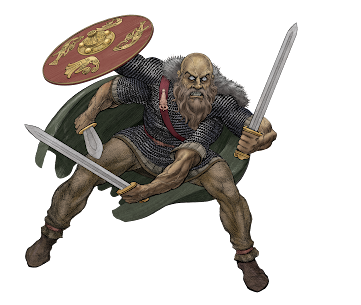
The Viking hero Starkad / Starkaðr was a warrior-poet with extra arms who was blessed by the god Odin. This aristocratic transgressive lone wolf character is actually a prehistoric Indo-European archetype equivalent to Hercules in Greece, Suibhne in Ireland and Krishna’s cousin Siśupāla of Chedi from the Hindu religion of India. In this video I explain who Starkad was and how his myths parallel other Indo-European stories of a Sigma male outsider who loves kings, hates the lower classes, is rude to women and goes into mad rages of extreme violence against his enemies.
-Compton, T., ‘Victim of the Muses: Poet as Scapegoat, Warrior and Hero in Greco-Roman and Indo-European Myth and History’ Washington, DC: Center for Hellenic Studies (2006).
-Cohen, D. “Suibhne Geilt.” Celtica 12:113–124. (1977).
-Dumézil ‘Aspects de la fonction guerrière chez les Indo-Européens’ (1956).
-Hui, J ‘'Svá segir Starkaðr’: Manipulating Memoralisation in Gautreks saga’ (2015).
The Proto-Indo-Europeans of the Pontic Caspian Steppe and other parts of Eastern Europe in the neolithic worshipped a paternal deity who they called Dyḗus ph₂tḗr “sky father”. With comparative linguistics and comparative mythology we can learn a lot about this ancient god from whom Greek Zeus, Roman Jupiter, Irish Dagda, Vedic Dyáuṣ Pitṛ́ and Norse Odin and many others also derive. In this video I explain what we know about the god’s mythic roles relating to cattle, his relationship to other gods in the Indo-European religion and his association with different animals in later pagan religions.
Anthony, D., ‘The Horse, the Wheel, and Language’ 2007 Dumezil, G., ‘Mythe et Épopée’ 1973 Dumezil, G., ‘Mitra-Varuna: An Essay on Two Indo-European Representations of Sovereignty’, 1988 Kershaw, K., ‘The one-eyed god: Odin and the (Indo-)Germanic Männerbünde’ (Journal of Indo-European studies monograph) 2000 Lincoln, B., ‘THE INDO-EUROPEAN MYTH OF CREATION’ 1975 Matasović, R., ‘A Reader in Comparative Indo-European Religion’ 2010 Mylonas, G. E., ‘The Eagle of Zeus’ 1946 Puhvel, J., ‘Victimal Hierarchies in Indo-European Animal Sacrifice’: The American Journal of Philology , Autumn, 1978, Vol. 99, No. 3 (Autumn, 1978), pp. 354-362 Puhvel, J., ‘Comparative Mythology’ 1987
In traditions around the world we see the same mythic trope of a god disguised as a beggar so that he can test mortals. Very often this is based on a moral that one should uphold the ancient tradition of honouring the guest in one's home. The myths usually show the god, who can be Zeus, Shiva, or Odin, punishing the mortals who fail to show them proper hospitality when they visit. What lessons can pagans learn from these myths
Atharvaveda Heimskringla Homer, The Odyssey Ovid, Metamorphoses Orchard, A., (trans) The Elder Edda (2011) The Rigveda Sturluson, S., The Prose Edda Togail Bruidne Dá Derga Vidyaranya Swami, Shankara Digvijaya
Secondary: von Glinski, M. L., Simile and Identity in Ovid's Metamorphoses Murnaghan, S., Disguise and Recognition in the Odyssey
The video specifically looks at an irish rite known as Imbas forosnai performed by elite seer poets known as Filíd, also the tairbfheis, a rite to determine the High king at the Hill of Tara. In Wales there were the awenyddion and in Scotland they had a pagan rite of prophecy called Taghairm. I also look at several Anglo-Saxon and Norse Icelandic saga sources discussing Ulfhednar, Hammramr, Elves, haunted barrows and seers and compare them with the dreams described by Homer and Pausanias in Ancient Greece.
Sources:
Chadwick, N., ‘Dreams in Early European Literature’, in: Carney, James, and David Greene (eds), Celtic studies: essays in memory of Angus Matheson 1912–1962, London: Routledge, 1968. 33–50.
Martin Martin A Description of the Western Islands of Scotland (1703)
O Rahilly, T. F., ‘Early irish history and mythology’ (Dublin 1946)
"In Search of the Earth-Mother of Anatolia"
A documentary which looks at the root of the Earth Mother goddess common to European pagan religions; call her Cybele, Rhea, Ceres, or whatever - she comes from Anatolia and spread out in various forms from the Neolithic to the Iron Age. One late form was Artemis of Ephesus, an Anatolian version of a Greek goddess who was then sent back to Europe in her new form. This film focuses mainly on the Lycians, who were an early Indo-European people in Anatolia who seem to have preserved more of the pre-Indo-European Anatolian religion and culture than most.
'Leto transforms the Lycian peasants to frogs' painting by Alex Cristi
Sources:
- Bryce. T., 'The Lycians in Literary and Epigraphic Sources' (1986)
- Ovid 'Metamorphoses', Melville. A. D. (trans) (Oxford, 1986)
People always ask me about Neolithic, pre-Indo-European European religion, and how much survived. I usually say that it is not possible to know much about the pre-literate Neolithic Europeans and hard to distinguish what elements of subsequent IE religion were carried on from before. However we can learn a lot by looking at Anatolia.
10,300 years ago, hunter gatherers in Anatolia started farming. This figure (above) of a seated Anatolian goddess dates to about 8000 years ago. 8,500 years ago Anatolians spread across Europe, replacing most of the people (Western Hunter-Gatherers) who were there before and bringing their agriculturally oriented religion which was heavily conscious of seasons and when to plant. To talk about pre-IE religion in Europe, is the same as talking about Near-Eastern religion since it all originates in Anatolia just as Neolithic Europeans did. Indo-Europeans invaded Anatolia and Europe over the 3rd millennium BC - the ones in Anatolia spoke languages (the Anatolian language family) ancestral to Hittite and Luwian. DNA shows that genetically, Anatolians were not altered much by the IE invasion, especially compared to Northern Europe. It is interesting therefore that their religion was so different to other Indo-European religions. For example, Hittite temples were built according to the same celestial principles as Stonehenge (aligned for solstices) and other Neolithic solar monuments.
Also worthy of note is the fact that some Anatolian peoples, such as Lycians, practiced matronymics, and a tradition of legitimacy and inheritance denoted by the maternal rather than paternal line. Lycian women were able to marry foreigners and have legitimate children but Lycian men, even aristocrats, could not. This is very unlike any other Indo-European culture and almost certainly derives from earlier customs of the Near-East!
Cybele
The goddess Cybele was Anatolian in origin; an earth mother credited with inventing agriculture. She is seems to be a pre-IE goddess and as her cult spread across the Mediterranean, she was associated and combined with other agricultural mother goddesses who were obviously derived from the same original Neolithic Anatolian figure. eg. Artemis of Ephesus was a regional cult in which the Greek hunter goddess was transformed into the Anatolian mother goddess. This cult was influential on the later cult of the Virgin Mary. The Roman goddess Ceres, whose name is cognate with cereal, was seen as equivalent to Greek Demeter (the Mother) - and her cult survived for awhile in Rome alongside the imported Anatolian cult of Cybele, who they called Magna Mater. The Romans also associated the Greek mother goddess Rhea (here seated much like Cybele or the prehistoric Anatolian goddess statue) with the Magna Mater.
Artemis of Ephesus
Ceres
Rhea
Just as there is more Anatolian farmer DNA in Southern than Northern Europe, we see more clear evidence of the endurance of the Neolithic agricultural mother goddess in the South, and most of all among the Anatolians living in the region where her cult originated. If you want to know what religion in pre-IE Britain or Europe might have been like, then take a look at the castrated transgender priests and orgiastic cults of Cybele or other Near-Eastern semi-matriarchal cults.
Now begins Eastermonth! This is an entire month which the Anglo-Saxons devoted to the goddess Ēastre. Her name is not, as some erroneously claim, related to the Semitic goddess Ishtar, nor to the hormone estrogen, but is in fact Germanic. Ēastre, or as she is known in modern English, "Easter" was equivalent to the continental German goddess Ostara and both names are derived from that of the ancient Indo-European goddess of dawn *H₂ewsṓs (→ *Ausṓs), from whom the Vedic goddess of dawn, Ushas, is also derived. One of the holy names of Ushas was Bṛhatī (बृहती) "high" which is cognate with Proto-Celtic *Brigantī meaning "The High One", and the name of a British goddess Brigantia (Brigid). The Greek goddess Ēōs, Baltic goddess Aušrinė and Roman goddess Aurora are all etymologically derived from the same IE word and likely from the same PIE goddess.
The month is attested by Anglo-Saxon monk Bede, who said feasts of the goddess were celebrated in April, but when we can only guess. There is no reason to believe it was on the exact day Christians now celebrate Easter. Some aspects of Christian Easter resemble paganism because the symbolism of eternal life and rebirth are important for both. The Roman pagans had a flower festival called Floralia on 27th April which may well have had equivalents in Britain, but surely the largest celebration for the dawn goddess was at the end of the Easter month on the eve of May day which heralds the dawn of summer. I consider May day, or specifically the night before it, to be the climax of Eastermonth and a holy celebration to this sacred goddess. I have covered the diverse celebration of May day around the world in a video already (see link below). The photo above is shows the May queen in Devon in 1955, a young girl who symbolises the dawn goddess Easter who heralds the start of Summer, and the May pole which is a phallic fertility symbol.
I would also speculate that since, in Celtic and Germanic countries, the folk culture around May eve has focused heavily on sexuality, even in recent times, usually of an unbridled sort normally prohibited by Christian morality, and since the cult of Aurora was often invoked in sexual poetry, we might well assume that the cult of Easter had a heavy emphasis on the sexuality and fertility of young people, especially women. The Greek Eos was cursed by Aphrodite with unsatisfiable sexual desire causing her to abduct handsome young men - a promiscuity very reminiscent of an account of May eve among the English in the early modern era by a puritan who wrote that on that night "Scarcely a third of maidens going to the woods returned home undefiled", similar account are recorded in Ireland.
The fecundity of the earth is tied explicitly to that of the wombs of nubile girls of the community. For this reason a sort of transgressive sexuality becomes temporarily permissible due to the divine associations of sex on this night.
Irish, Nordic, Greek and Indian texts all warn about an evil age that will be the final one in a cycle of ages, in which religious principles are forgotten, hardship and strife are widespread and people become evil. This video quotes from Hindu sources, Ovid's Metamorphoses, the Old Norse pagan text Völuspá (the prophecy of the seeress) and the old Irish prophecy of the crow goddess Badb.
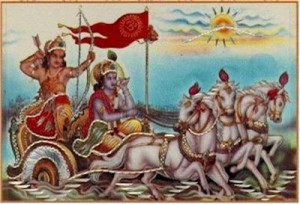
While reading the Hindu epic Mahābhārata for the first time, I was struck by several quite obvious parallels in European literature regarding archery, which immediately aroused my suspicion of a common Proto-Indo-European origin. Not just because both Indian and Homeric sources use similar language, such as describing arrows as "winged" and bows as "shining" (West, 2007) but because of similar kinds of contests of archery.
The first simply involves the stringing of an incredibly strong bow. In Mahābhārata it is a bow so strong that it can be strung by none but Arjuna the son of Indra the thunder god. This feat Arjuna performs at a contest where he shoots five arrows into a horn. The story has the same origin as one in the Odyssey, in which Penelope, wife of Odysseus, says to her suitors in her husband's absence that she will marry any who can string his bow. All fail but Odysseus himself, who strings the bow while in disguise and thus woos his own wife. This follows an Indo-European tradition of heroic wooing.
In the Iliad at the funeral of Patroclus there is an archery contest in which a bird must be shot from the top of a mast, and this is very like Drona's archery test in Mahābhārata in which a fake bird is used as the target instead.
Another Greek source tells the story of how Heracles seeks a throne through marriage and hears that Eurytus, king of the city of Oechalia, is holding an archery contest with his daughter Iole as a bride for a winner. Of course Heracles beats everybody.
Another example in Mahābhārata was the archery contest in which the hand of Princess Draupadi is the prize at her Swayamvara. The five Pandavas all attend in disguise as Brahmins. Here we see both the theme of the archery contest with a Princess bride as the prize, and also the the theme of the heroic suitor in disguise.
You may recognise this story from Robin Hood? I did! Michael Nagler wrote that the origin of this story, widespread in mythology and fairy tales, is an Indo-European contest "with a disguised hero whose invincible identity is hidden behind a mask of social inferiority, the former arousing the suitors' fear and the latter their indignant rejection."
The contest is recorded in 'A Gest of Robyn Hode", one of the oldest surviving tales of Robin Hood, printed between 1492 and 1534, but was based on much older stories. It is possible the Robin Hood stories borrowed elements from Greek myths, but it seems to me just as likely that the Robin Hood version is derived from a native English myth, perhaps of Anglo-Saxon or even of Celtic origin?
Let me know if you can shed any light on this in the comments.
Sources
Michael N. (1993) "Penelope's Male Hand: Gender and Violence in the Odyssey,"
Indo-European Poetry and Myth By M. L. West (2007)