
Showing posts with label Norse mythology. Show all posts
Showing posts with label Norse mythology. Show all posts
Wednesday, 22 May 2024


Thursday, 16 May 2024
How to be a Heathen? Asatru online course

Starting Heathenry
Starting Heathenry is a NEW ritual-focused online course which will furnish you with the knowledge and confidence you need to practise the Germanic Heathen religion alone or with others, making wise decisions about worship based on reliable historical evidence.
The course teaches you how to construct Heathen prayers for yourself, not according to the established rites of any modern group, but according to what historical sources show. Starting Heathenry assumes you are interested in Germanic paganism, know about the gods and myths, and want to begin practising this religion, but require guidance on how to do so.
 |
| Key points are displayed in videos as bullet-points to help you remember them |
Micro-learning
A modern way of learning an ancient religionStarting Heathenry is based on a micro-learning structure which is proven to improve knowledge retention by 18-80% in students compared to other learning methods. The 10 lessons include over 50 videos, and quizzes to access from your phone or computer. Absorb more than 5 hours of learning material bit by bit, as it suits you. Within just 20 minutes after a hearing a lecture or reading a book, 50% of newly learned information is forgotten. Over the next 9 hours, that number drops by a further 10%, and after a month, only 24% of the information remains without revision or repeat learning. Micro-learning is designed so you retain the knowledge over a long period. I previously worked on crafting such learning material for the WHO to help health care professionals learn about the dangers of side effects from medicines. Now I am using the same technique to help Heathens learn to worship the gods of their ancestors.
Enroll today. Your path to knowing the gods through ritual starts here.
Friday, 1 March 2024
Odin's Role as God of Runes and Galdra
Returning to the topic of the highest god, Odin. First I address why the Romans weren't entirely wrong when they compared him to Mercury/Hermes. Then I present my theory about how Odin learned the nine sacred songs called Galdra and why this is related to his role as the god of the runes. The dankest god, Odin, and esoteric theories go together like runes and galdra. I look at the origins of runes themselves and the usage of runes in conjunction with galdra and thus seek to solve the mystery of the runes and the god who first learned them on the world tree.
Thursday, 7 September 2023
How to set up a Heathen Altar in your Home : Paganism 101
A guide for setting up an altar to the gods inside your home which you can use for domestic worship. Many people are requesting this kind of content and its been nearly six years since I last made a video like this, so here you go!
Wednesday, 28 December 2022
Odin the Cuckold?
"Myths are things that never happened but always are" Sallustius
“Now, the myths imitate the gods themselves in terms of what is expressible and inexpressible, unclear and clear, manifest and hidden, and they imitate the goodness of the gods. So, as the gods have made the good things stemming from perceptible things common knowledge for all, but those stemming from intelligible things only to the wise, in the same way, the myths tell everyone that there are gods, but who they are and what they are like, they tell only to those who are able to understand.” Sallustius
Myths can be interpreted in many ways; some are simply crude naturalistic or material stories which associate a god with natural phenomena. In addition to these Sallustius also describes Psychic myths which pertain to the activity of the soul and appeal to poets, and also Theological myths which do not pertain to material attributes and behaviours associated with the gods but convey aspects of the gods and divine wisdom philosophically. This last kind requires interpretation by the wise with specific reference to the nature of the gods in the context of the entire tiered cosmos. There are myths of this kind in which the gods behave in ways that are metaphysically problematic such as when a god kills, rapes or consumes another god - which naturally confuses those who attempt to interpret them literally. There are also certain myths which combine aspects of all three kinds of myth and can be understood by different kinds of people differently but must be dissected appropriately by the learned.
Here I shall offer an exercise in public myth interpretation, in the hope that the method I demonstrate not only illuminates the divine meaning of this particular myth, but that the method here shown shall serve as a model that others may use to aid them in their understanding of the gods and their pursuit of pious worship.
Here I shall offer an exercise in public myth interpretation, in the hope that the method I demonstrate not only illuminates the divine meaning of this particular myth, but that the method here shown shall serve as a model that others may use to aid them in their understanding of the gods and their pursuit of pious worship.
This particular myth, which concerns Odin and his two brothers, has quite naturally confused many for centuries, since it is only recorded by Christians who have deliberately used it to defame the immortal gods, and one would be inclined to attribute the myth itself to Christian fabrication, were it not for the fact that it is recorded in similar forms by quite chronologically and geographically remote sources.

Óðinn means “ecstatic one” and is formed with the prefix óðr which refers to the divine frenzy or ecstasy with which that god was associated. In Völuspá He and His brothers Vili (“will” as in “will power”) and Vé (“holy” or “holy space” which is cognate with with Gothic weiha 'priest' and with Old English weoh “idol” or “sacred space”) create the world through the first sacrifice of the primordial being, Ymir. This act is the foundation of all sacrifice and establishes order in the cosmos. All subsequent sacrifices recreate and participate in the same sacred moment when Ymir was slain, and from his disordered body came forth the ordered forms which constitute our world. The names of the three brothers demonstrate the prerequisites necessary for a sacrificer to perform a proper sacrifice; divine ecstasy, will and sacred space.
This must be kept in mind when addressing the myth which is the subject of this blog post. The myth itself is alluded to in three sources; First in Lokasenna, a poem which may have been composed in the 10th century, and in which Odin’s wife Frigg “beloved / wife” is accused by Loki “lock / bound” of taking both Vili and Vé as lovers. Second, in Ynglinga saga, written by Snorri Sturlusson in the 13th century, there is an allusion to Odin’s long absence during which His brothers took over His kingdom and His wife.
“Odin had two brothers, the one called Ve, the other Vilje, and they governed the kingdom when he was absent. It happened once when Odin had gone to a great distance, and had been so long away that the people of Asia (nb. Anatolia - Snorri wrongly connects the Aesir to Anatolia by way of folk etymology) doubted if he would ever return home, that his two brothers took it upon themselves to divide his estate; but both of them took his wife Frigg to themselves. Odin soon after returned home, and took his wife back.”
 |
| Ollerus surfing on a bone |
The third source, Saxo Grammaticus' Gesta Danorum, is more complicated to interpret because the Christian author reduces all the gods to mortal humans with histories in Scandinavia and the near East. Saxo tells two or three heavily distorted stories which appear to pertain to the same original myth; in one of these, a euhemerised version of the god Ullr “glory” with the Latinised name Ollerus replaced Othinus (Odin) after the latter was banished for His rape of Rinda. Ollerus is described as a cunning wizard who could travel across the seas on a bone - He ruled for ten years, but was ultimately expelled by the returning Othinus, and killed by the Danes in Sweden. A second refers to another wizard called Mithotyn (Mit-Oðinn) who wanted to be worshipped as a god, and so seized the opportunity during another of Othinus’ journeys abroad, and led the people to pay holy observances to his name. Just as in the other story, Othinus returns and the usurper flees, but this time to Finland, and is there killed by the locals. Mithotyn apparently haunted his barrow thereafter - which is likely Saxo’s way of downplaying the significance of his cult which evidently spread to Finland. Saxo does not mention Frigg’s infidelity in either of these stories but he does in a third;
“But his queen Frigga, desiring to go forth more beautified, called smiths, and had the gold stripped from the statue (of Odin). Odin hanged them, and mounted the statue upon a pedestal, which by the marvellous skill of his art he made to speak when a mortal touched it. But still Frigga preferred the splendour of her own apparel to the divine honours of her husband, and submitted herself to the embraces of one of her servants; and it was by this man’s device she broke down the image, and turned to the service of her private wantonness that gold which had been devoted to public idolatry. Little thought she of practising unchastity, that she might the easier satisfy her greed, this woman so unworthy to be the consort of a god; but what should I here add, save that such a godhead was worthy of such a wife? So great was the error that of old befooled the minds of men. Thus Odin, wounded by the double trespass of his wife, resented the outrage to his image as keenly as that to his bed; and, ruffled by these two stinging dishonours, took to an exile overflowing with noble shame, imagining so to wipe off the slur of his ignominy.”
From Saxo’s three mangled stories we can discern there was an original myth, free of Christian moralising and euhemerism, in which Odin was absent and during this time He was usurped by one or two other gods and that His wife Frigg was unfaithful during this absence. This then matches what Snorri preserved in Ynglinga saga and what we see in the earlier Lokasenna poem.
Despite what pop culture representations and ill-informed online commenters may tell you, Germanic paganism was not at all tolerant of infidelity. Tacitus described the practices of the Germanic tribes of the 1st century as follows:
“Very rare for so numerous a population is adultery, the punishment for which is prompt, and in the husband's power. Having cut off the hair of the adulteress and stripped her naked, he expels her from the house in the presence of her kinsfolk, and then flogs her through the whole village. The loss of chastity meets with no indulgence; neither beauty, youth, nor wealth will procure the culprit a husband.”
1000 years later the Vikings of Iceland were less brutal towards such women but hardly any more forgiving. Adultery resulted in either divorce or fines, or both. So we cannot conclude that the infidelity of Frigg reflected a social tolerance of polyamory, promiscuity or infidelity since none of these were remotely acceptable. Therefore this myth must belong to the category which Sallustus termed Theological and must be explained philosophically.
In light of my brief explication of the creation myth from Völuspá above, we can also understand the cuckold myth as relating to the danger of imbalance which threatens the stability of the sacrificial act whence the world and divine order proceeds. When one of the three essential prerequisites of sacrifice is absent; divine ecstasy, then the other two constituents expand beyond their natural limit, taking its place and thereby resulting in an abominable crime, here represented as cuckoldry - the defilement of the beloved - as well as the usurpation of the divine kingdom. The wise see the need for the balance of the three sacred components, but the unwise may proceed with a blót having only intent and a sacred space but none of the óðr and this lack produces an imbalance as shown in the myth.
Óðr is often translated as “frenzy” “fury” or “madness” but it can equally be translated as “ecstasy”, from the Ancient Greek ἔκστασις ekstasis, "to be or stand outside oneself” and this more properly reflects the state of being one must first achieve prior to communion with the gods. As a noun the word can also mean "mind, feeling" and also "song, poetry" - the former pertaining in this context to the mindset or feeling proper to ritual space and time, and the latter pertaining to the sacred galdra “chants, songs” which Odin himself created, since he is called ein skǫpuðr galdra “the sole creator of galdra”.
There also remains the question as to the Identity of Odin’s brothers in other myths. Separate from the creation of the world, we also find in Völuspá a story of Odin and his two brothers who created mankind but here his brothers are named Lóðurr and Hoenir.
There also remains the question as to the Identity of Odin’s brothers in other myths. Separate from the creation of the world, we also find in Völuspá a story of Odin and his two brothers who created mankind but here his brothers are named Lóðurr and Hoenir.

“17. Until there came three from that company, powerful and pleasant Æsir to a house. They found on land, lacking vigour, Ash and Embla, free of fate.
18. Breath they had not, energy they held not, no warmth, nor motion, nor healthy looks; breath (Önd can mean breath or spirit) gave Odin, energy (óð can mean energy but refers to a natural force present throughout nature) gave Hoenir, warmth gave Lódur, and healthy looks (the gifts of Lóðurr can also be translated as blood/flesh and good colour/hue/complexion).”
Völuspá - Andy Orchard translation
Whether Lóðurr and Hoenir are identical to Vili and Vé is the subject of much scholarly debate but I will not cover that here, suffice to say that this is a possible interpretation. There is also a possibility, suggested by Hilda Ellis Davidson, that the three manifestations of Odin encountered by Gylfi in the Prose Edda and named Hárr “High”, Jafnhárr “Just-as-High”, and Þriði “Third”, can be identified as Odin, Vili and Vé. Each of these theories has merit, but even if they are incorrect, it does not affect my interpretation of the cuckolded Odin myth.
Thursday, 8 December 2022
The Northman - An analysis of pagan scenes
Further to my written review of The Northman (2022), published on this blog in April, I have now created a much longer and more detailed video review of the film. This video includes close watching scene analysis of all the parts of the film which pertain to Nordic paganism. I explain the sources and reasoning behind the stylistic and thematic decisions of the film makers and provide examples of written and archaeological precedents to justify them wherever possible.
Robert Eggers' The Northman is the best Viking film ever made but some of the pagan themes within are too esoteric for everyone to understand. In this review, I explain the origin of the pagan rituals and symbols throughout the film and what they mean. Everything from valkyries, to the raven fylgja, the horned spear dancer, and the Odinic initiation ritual in a Neolithic barrow. I also explain the tension depicted in the film between the cults of the gods Freyr and Odin.
ARTWORK
Most art was by Christian Sloan Hall including Odin, Freya, Starkad and Valkyries
Horned spear dancers by Hungerstein
Wading through Hell by Jack Jones
Hel goddess by Leo Albiero
World tree by Pete Amachree
Spirit of Yule by Christopher Steininger
Mimir’s head by Graman
Vendel helmet cgi by Roy Douglas
Bear spirit and corpse animations by Castor and Bollux animation
Horned spear dancers by Hungerstein
Wading through Hell by Jack Jones
Hel goddess by Leo Albiero
World tree by Pete Amachree
Spirit of Yule by Christopher Steininger
Mimir’s head by Graman
Vendel helmet cgi by Roy Douglas
Bear spirit and corpse animations by Castor and Bollux animation
MUSIC
Torulf
Hildigaldra
Borg
SOURCES
Primary
- Gesta Danorum by Saxo Grammaticus
- Germania by Tacitus
- Risala by Ibn Fadlan
- Egil’s saga
- Njal’s saga
- Vatnsdæla saga
- Eyrbyggja saga
- Landnámabók
- Sturlaugs saga starfsama
- Gautreks saga
- Grettir's saga
- Saga of Bósa and Herraud
- Víga-Glúms saga
- Heimskringla
- Beowulf
- Hervarar saga
Secondary
- Chadwick, N., ‘Dreams in Early European Literature’, in: Carney, James, and David Greene (eds), Celtic studies: essays in memory of Angus Matheson 1912–1962, London: Routledge, 1968. 33–50.
- Davidson, H.E., Gods and Myths of Northern Europe (1964)
- Davidson, H.E., The Road to Hel: A Study of the Conception of the Dead in Old Norse Literature, Cambridge University, (1943).
- Peter-Schjødt, J., ‘Óðinn - The Pervert?’ in Res Artes et Religio: Essays in Honour of Rudolf Simek p. 534 (2021: Kısmet Press) https://archive.org/details/res-artes-et-religio-essays-in-honour-of-rudolf-simek-kismet-press
- Ramos, Eduardo, ‘The Dreams of a Bear: Animal Traditions in the Old Norse-Icelandic Context’ (2014)
- Rowsell, T., “Riding to the Afterlife:The Role of Horses in Early Medieval North-Western Europe,” MA Thesis, University College of London, 2012.
- Rowsell, T., “Woden and his Roles in Anglo-Saxon Royal Genealogy”, University College London, (2012).
- Rowsell, T., "Religious Continuity in Northern European Boat Burial Practices of the Vendel Period" Research proposal, (2015)
- Rowsell, T., “Gender Roles and Symbolic Meaning in Njáls Saga” Medievalists.net 2012
- Kershaw, K., ‘The one-eyed god: Odin and the (Indo-)Germanic Männerbünde’ (Journal of Indo-European studies monograph) 2000.
Monday, 12 September 2022
Ship of the Sun or Ship of the Dead? Stone Ships

Art
Original works created for this video
Robert Molyneaux - CGI reconstruction of the Jelling stone ship in Denmark
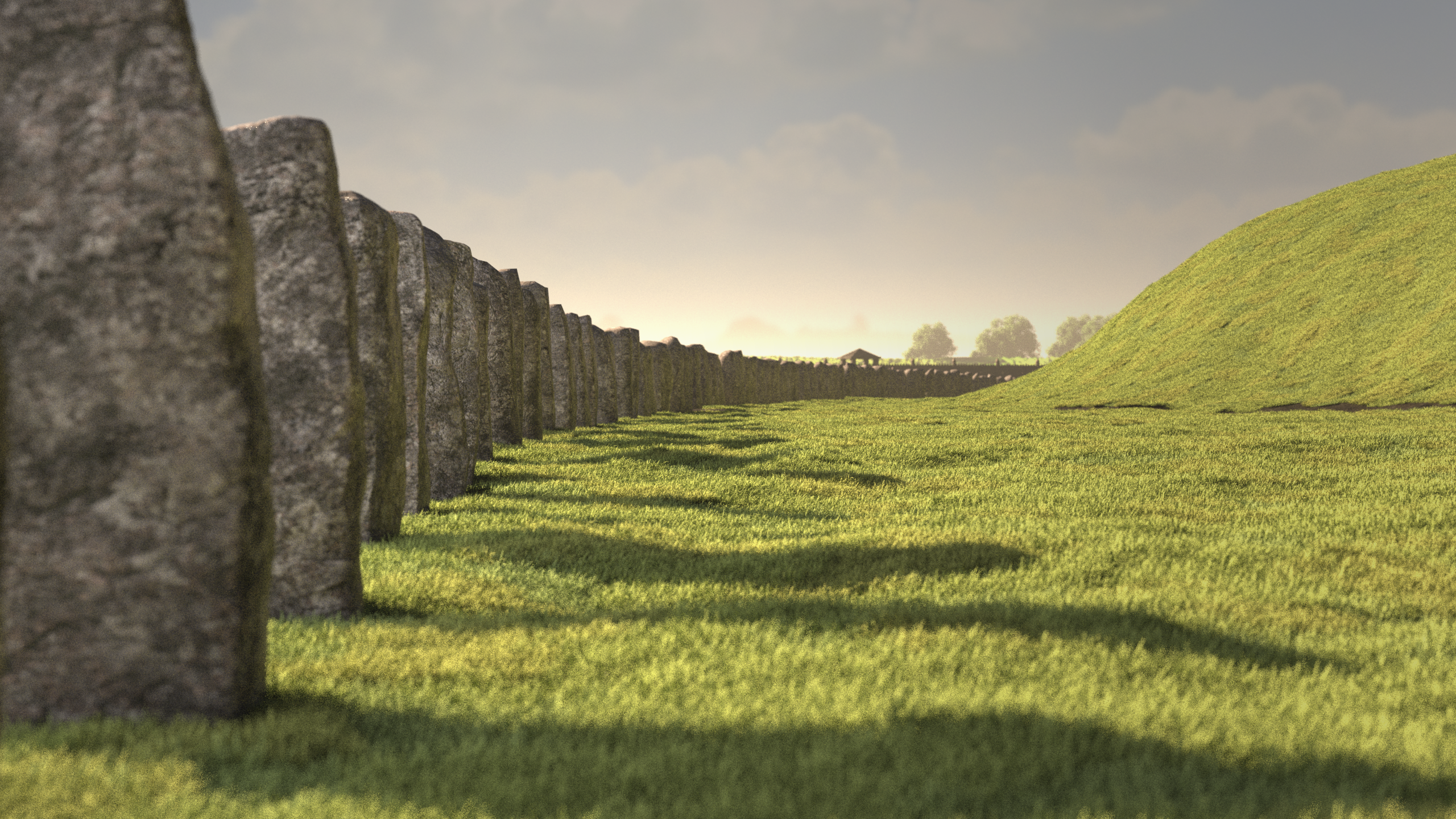

Other art work used in the video
Christian Sloan Hall - Odin / First blood / Eastre dawn goddess
Roy Douglas - Vendel helmet cgi
Christopher Steininger - Ship to the otherworld animation
Stella Spente - Freyja in her chariot
Christopher Steininger - Ship to the otherworld animation
Stella Spente - Freyja in her chariot
Ryan Murray - Treudd ritual
Gemini Science - CGI ship burial
Graman - Sutton hoo burial
Eva Gjerde - Storhaug ship burial
Eva Gjerde - Storhaug ship burial
Sources
- Bonde, N & Stylegar, F. A., ‘Between Sutton Hoo and Oseberg – dendrochronology and the origins of the ship burial tradition’, Danish Journal of Archaeology (2016), 5:1-2, 19-33
- Davidson, H.E., The Road to Hel: A Study of the Conception of the Dead in Old Norse Literature, Cambridge University, (1943).
- Elliott, R. N. ‘Håga in context – An analysis of the Håga complex in the Bronze Age landscape of the Mälar Valley region’ (Uppsala: 2020)
- Jackson, E. “Not Simply Lists”: An Eddic Perspective on Short-Item Lists in Old English Poems. Speculum, 73(2), 338–371. (1998)
- Shenk, Peter, To Valhalla by Horseback? Horse Burial in Scandinavia during the Viking Age, (Oslo: The Centre for Viking and Medieval Studies, University of Oslo, 2002).
- Skoglund, P., ‘Stone ships: continuity and change in Scandinavian prehistory, World Archaeology, 40:3, 390-406, (2008)
- Rowsell, T., “Riding to the Afterlife:The Role of Horses in Early Medieval North-Western Europe,” MA Thesis, University College of London, (2012).
- Rowsell, T., "Religious Continuity in Northern European Boat Burial Practices of the Vendel Period" Research proposal, (2015)
- Vikinge skibs museet website
MUSIC:
The whole other - Ether oar
Wolcensmen - Sunne (remix by Eternal Rik)
Saichaika - Musica aeterna
Halindir - Hedelandet II
Bark sound productions - My
Aaron Kenny - yonder hill and dale
Patrick Patrikios - away
Kevin MacLeod - Rites
Stark von Oben - Praetorian Germanicus
Stark von Oben - Winter Soulstice
Ormgård - Séta
Borg - Death of Winter
Myling - Töcken
Halindir - Hummocks in fog
Rishi Shah - From Runes to Ruins
Xurious - Steppe expansion
Friday, 29 July 2022
Indo-European and Ancient North Eurasian cosmology - The World Tree and Hell
Watch above on Rumble or click to watch on Odysee or YouTube
Through comparative mythology we can reconstruct the earliest Indo-European beliefs about the cosmos and the afterlife as far as 6000 years back. but Indo-European religion has many features in common with Siberian and Native American religions. These three groups all share common ancestry from an ice-age population called Ancient North Eurasians, so we can even reconstruct cosmological beliefs of a Siberian people 20,000 years ago! This film helps you to understand the most ancient and fundamental pagan beliefs concerning death, the underworld and reincarnation.
ART


- Hell hounds / Wolf art / Gaulish warrior / Yamnaya couple / Hel and her army by Christian Sloan Hall
- Sacrifice to the head in Hell / Yamnaya funeral by Graman
- Wading through Hell by Jack Jones
- The World Tree in Hell by Pete Amachree (summer pudding)
The following artists also kindly contributed preexisting art for this video:
- Animations by Castor and Bollux animation
- Elf blot by Thomas Cormack
- Sky father by Andrew Whyte
- Celtic chariot by Alex Cristi
- Yamnaya facial reconstructions by Robert Molyneaux
- Primordial sacrifice by Johan Jernhed
- Hell tree / boat of souls / Hell hall by Waking of sky tree
- Haoma drinker (viraf's dream) by A Forest of Shadows Art & Illustration
- Hel by Leo Albiero (contact him at Leohjart@outlook.com)
- Bronze age map by Dan Kogosov
Additional Thanks
Readings contributed by voice actor D. W. Draffin of 'Study of Antiquity and the Middle Ages' on YouTube
Research information relating to *Kolyéh₂ from John of Crecganford on YouTube
Music
In order of use in the score
Tom May - Atlantis falling
Gvasdnahr - Through the Astral void
Wolcensmen - Sunne (remix by Eternal Rik)
Saichaika - Musica Aeterna
Kevin MacLeod - Rites
Borg - The Dancing Forest
Chris Zabriskie - The_Theatrical_Poster_for_Poltergeist_III
Legionarii - Aristocracy
Andrew weis - scottish medieval
Kevin MacLeod - Enchanted journey
Bark sound productions - Forn
Bark sound productions - Eld
Rishi Shah - song IV - From Runes to Ruins
Borg - May queen enters the circle
Doug Maxwell - Bansure raga
Kevin MacLeod - Dhaka
Doug Maxwell - Arabian nightfall
JR Tundra - Shesh Pesh
Lorcán Mac Mathúna - Caoineadh Fherdia
Stewart Keller - flickers while the door creaks
Myling - Töcken
Xurious - Steppe expansion
Realization of a New Earth - I Think I Can Help You
Ormgård - Sjálfsforn
Ormgård - Sjálfsforn
Chris Zabriskie - Virtues inherited
Altyn Tuu - Altai tuva mix
Mauerbrecher - Hunnic horde
Eagle song of the Hopi Indians
Sources
- Ara, M. ‘Eschatology in the Indo-Iranian Traditions: The Genesis and Transformation’...
- Anthony, David W.; Brown, Dorcas R. (2019). "Late Bronze Age midwinter dog sacrifices and warrior initiations at Krasnosamarskoe, Russia". In Olsen, Birgit A.; Olander, Thomas; Kristiansen, Kristian (eds.). Tracing the Indo-Europeans: New evidence from archaeology and historical linguistics. Oxbow Books. ISBN 978-1-78925-273-6.
- Berresford-Ellis, P. ‘The Ancient World of the Celts’ Constable 1998
- Dineley, M. 2014 ‘Beakers were for Beer! part one: ale, mead & residues’
- Dodge, Erick. (2020). Orpheus, Odin, and the Indo-European Underworld: A Response to Bruce Lincoln's Article “Waters of Memory, Waters of Forgetfulness"”. 10.13140/RG.2.2.15131.90402.
- Grim, J. ‘The Shaman: Patterns of Siberian and Ojibway Healing’ 1983
- Günntert, H. Kalypso. Bedeutungsgeschichtliche Untersuchungen auf dem Gebiet der indogermanischen Sprachen, 1919
- Lincoln, Bruce. (1982). Waters of Memory, Waters of Forgetfulness. Fabula. 23. 19-34. 10.1515/fabl.1982.23.1.19.
- Lincoln, Bruce. Death, War, and Sacrifice: Studies in Ideology & Practice. 2nd ed. edition. Chicago: University of Chicago Press, 1991.
- Meyer, K ‘Der irische Totengott und die Toteninsel’
- Nihil obstat blog ‘The Silencing of St. Oran’ 2009
- Okladnikov, A.P. ‘Yakutia Before Its Incorporation Into the Russian State.’ 1970
- Pitulko, V., Pavlova, E., Nikolskiy, P., & Ivanova, V. (2012). The oldest art of the Eurasian Arctic: Personal ornaments and symbolic objects from Yana RHS, Arctic Siberia. Antiquity, 86(333), 642-659. doi:10.1017/S0003598X00047827
- Saga Book XVI, Viking Society for Northern Research, UCL 1962-65
- Schlerath, B. 1954. Der Hund bei den Indogermanen. Paideuma, Bd. 6, H. 1. pp. 25-40. Frobenius Institute Stable
- Scholz, Herbert. The Hound in Greek-Roman magic and religion. Berlin. 1937 (p. 51)
Friday, 1 April 2022
Saturday, 19 March 2022
Starkad, the Sigma Male Viking Indo-European Lone Wolf
The Viking hero Starkad / Starkaðr was a warrior-poet with extra arms who was blessed by the god Odin. This aristocratic transgressive lone wolf character is actually a prehistoric Indo-European archetype equivalent to Hercules in Greece, Suibhne in Ireland and Krishna’s cousin Siśupāla of Chedi from the Hindu religion of India. In this video I explain who Starkad was and how his myths parallel other Indo-European stories of a Sigma male outsider who loves kings, hates the lower classes, is rude to women and goes into mad rages of extreme violence against his enemies.
ART
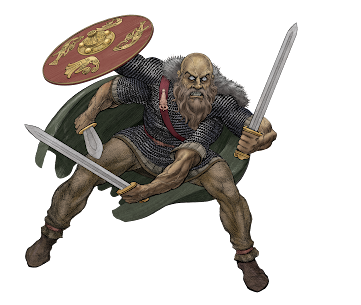
Starkad art by Christian Sloan Hall
Sources:
- -Compton, T., ‘Victim of the Muses: Poet as Scapegoat, Warrior and Hero in Greco-Roman and Indo-European Myth and History’ Washington, DC: Center for Hellenic Studies (2006).
- -Cohen, D. “Suibhne Geilt.” Celtica 12:113–124. (1977).
- -Dumézil ‘Aspects de la fonction guerrière chez les Indo-Européens’ (1956).
- -Hui, J ‘'Svá segir Starkaðr’: Manipulating Memoralisation in Gautreks saga’ (2015).
- -Puhvel, J., ‘Comparative Mythology’ (1987).
Friday, 14 January 2022
Monday, 8 November 2021
Friday, 30 April 2021
The Afterlife and the secret Odin Brotherhood with Dr. Mark Mirabello

Mark Mirabello, Ph.D., is a professor of history at Shawnee State University in Ohio and a former visiting professor of history at Nizhny Novgorod University in Russia. He has appeared on Ancient Aliens and America’s Book of Secrets on the History Channel as well as in the documentary The Kingdom of Survival. He is the author of The Traveler's Guide to the Afterlife which Examines beliefs from many different cultures on the soul, heaven, hell, and reincarnation; and also The Odin Brotherhood, first published in 1992, in which Mirabello reveals some of the secrets of a mysterious society in Britain which values "knowledge, freedom and power" as part of their occult work which honours Odin and the other Norse gods. I asked him about these and other subjects pertaining to magic, the afterlife and pagan beliefs.
Learn more about him and his published works on www.markmirabello.com
Monday, 16 November 2020
Interview with Ian Read of Fire + Ice

Germanic pagan Ian Read is best known for his neofolk project 'Fire + Ice' which “takes the purity and philosophy of early music and melds it into a message redolent with powerful seeds of honour, truth, loyalty and the bond of true friendship.” Ian is also Drihten (lord) and Rune-Master in the Rune-Gild, an initiatory school devoted to the esoteric and exoteric study of the Germanic runes.
Learn more on his blog: https://runa-eormensyl.com/
Learn more on his blog: https://runa-eormensyl.com/
Wednesday, 4 November 2020
The Indo-European Sky Father
The Proto-Indo-Europeans of the Pontic Caspian Steppe and other parts of Eastern Europe in the neolithic worshipped a paternal deity who they called Dyḗus ph₂tḗr “sky father”. With comparative linguistics and comparative mythology we can learn a lot about this ancient god from whom Greek Zeus, Roman Jupiter, Irish Dagda, Vedic Dyáuṣ Pitṛ́ and Norse Odin and many others also derive. In this video I explain what we know about the god’s mythic roles relating to cattle, his relationship to other gods in the Indo-European religion and his association with different animals in later pagan religions.
New Art:
Andrew Whyte http://basileuscomic.com/
Johan Jernhed
Sources:
Anthony, D., ‘The Horse, the Wheel, and Language’ 2007Dumezil, G., ‘Mythe et Épopée’ 1973
Dumezil, G., ‘Mitra-Varuna: An Essay on Two Indo-European Representations of Sovereignty’, 1988
Kershaw, K., ‘The one-eyed god: Odin and the (Indo-)Germanic Männerbünde’ (Journal of Indo-European studies monograph) 2000
Lincoln, B., ‘THE INDO-EUROPEAN MYTH OF CREATION’ 1975 Matasović, R., ‘A Reader in Comparative Indo-European Religion’ 2010
Mylonas, G. E., ‘The Eagle of Zeus’ 1946
Puhvel, J., ‘Victimal Hierarchies in Indo-European Animal Sacrifice’: The American Journal of Philology , Autumn, 1978, Vol. 99, No. 3 (Autumn, 1978), pp. 354-362
Puhvel, J., ‘Comparative Mythology’ 1987
Thursday, 30 April 2020
Odin and the Horned Spear-Dancer
Viking and Anglo-Saxon artwork often includes a man with bird shaped horns. This mysterious figure is known as the horned man or the weapon dancer. The motif shows up in various different contexts and over a huge geographic range and timeframe - from early Anglo-Saxon England to Viking age Russia. It is commonly associated with the cult of the Nordic god Odin or the Anglo-Saxon god Woden and with extraordinary shamanic rituals as I shall explain in this video.
Sources:
- Mortimer, Paul, 'What Colour a God's Eyes' (2018)
- Oehrl, Sigmund, 'Horned ship-guide – an unnoticed picture stone fragment from Stora Valle, Gotland' (2016)
- Oehrl, Sigmund, 'DOCUMENTING AND INTERPRETING THE PICTURE STONES OF GOTLAND' (2017)
Artwork
The following paintings of the horned spear dancer are by Hungerstein.


Thursday, 16 April 2020
Jive Book Review: Odin's Wife (Frigg and Jord)
Is Odin's wife Frigg the same as his lover Jord the Earth goddess? William P. Reaves thinks they are the same figure and that her cult survived in to recent times among German peasants who called her Frau Holda. I will briefly review his book on the subject here.
Friday, 13 March 2020
How to receive a visionary dream according to pagan sources
The video specifically looks at an irish rite known as Imbas forosnai performed by elite seer poets known as Filíd, also the tairbfheis, a rite to determine the High king at the Hill of Tara. In Wales there were the awenyddion and in Scotland they had a pagan rite of prophecy called Taghairm. I also look at several Anglo-Saxon and Norse Icelandic saga sources discussing Ulfhednar, Hammramr, Elves, haunted barrows and seers and compare them with the dreams described by Homer and Pausanias in Ancient Greece.
Sources:
Chadwick, N., ‘Dreams in Early European Literature’, in: Carney, James, and David Greene (eds), Celtic studies: essays in memory of Angus Matheson 1912–1962, London: Routledge, 1968. 33–50.
Martin Martin A Description of the Western Islands of Scotland (1703)
O Rahilly, T. F., ‘Early irish history and mythology’ (Dublin 1946)
Ramos, Eduardo, ‘The Dreams of a Bear: Animal Traditions in the Old Norse-Icelandic Context’ (2014)
Tendulkar, S. and Dwivedi, R., “Swapna’ in the Indian classics: Mythology or science?” (2010)
Vaschide and H. Piéron, ‘PROPHETIC DREAMS IN GREEK AND ROMAN ANTIQUITY’ (Oxford : 1901)
The Wooing of Emer by Cú Chulainn (Author: [unknown]), p.303 (paragraph 78.)
Saturday, 22 February 2020
Documentary: Ancient History of Ireland, Newgrange, Celts, Vikings
Ireland has a rich and fascinating ancient history; from the great megalithic structures of the Neolithic, like Newgrange, to the spectacular gold jewellery of the Indo-European Bell Beaker folk, the weapon hoards of the Irish Bronze Age, the enigmatic La Tene Celtic art of the Iron Age and the intricate knot-work of the Hiberno-Norse in the Irish Viking age. I look at all of these in this brief account of the history of Ireland, and then I discover a gothic castle called Knockdrinn, in which my ancestors lived, and which local people believe to be haunted. Finally, I read some spooky accounts of the ghostly creatures of the castle taken from the folklore collection at University College Dublin.
Original Art by Christian Sloan Hall

Sources:
Original Art by Christian Sloan Hall
Sources:
‘Analysis of the Economic Foundations Supporting the Social Supremacy of the Beaker Groups’, Fitzpatrick, Doce, Vazquez, (2016)
‘Bog Bodies – Kingship and Sacrifice’, Eamonn P Kelly (2006)
Reconstruction of Newgrange by Michael J. O'Kelly
‘Black Pool: Hiberno-Norse identity in Viking Age and Early Medieval Ireland’, Anton Amlé, (2014)
Folklore Collection UCD
‘Bog Bodies – Kingship and Sacrifice’, Eamonn P Kelly (2006)
Reconstruction of Newgrange by Michael J. O'Kelly
‘Black Pool: Hiberno-Norse identity in Viking Age and Early Medieval Ireland’, Anton Amlé, (2014)
Folklore Collection UCD
Friday, 14 February 2020
Podcast: Interview with Ralph Harrison of the Odinist Fellowship

This Podcast is also available on Apple Podcasts, Spotify, Podbean, Player FM and all good podcasting apps and platforms.
Ralph Harrison has been an Odinist for 40 years. He is the Director of the Odinist Fellowship, the UK’s only registered charity for the indigenous faith of the English people. They acquired a 16th century chapel in Newark which was consecrated on Midsummer's Day 2014 as the first heathen Temple in England for well over a thousand years. You can donate to the charity or the temple using the links below. Ralph and I had a nice chat about the Heathen religion, its rise in popularity in recent years due to the success of TV programs like Vikings, and also the dangers the faith faces from new age influences like Wicca and naturalism.
Contact the Odinist Fellowship
Email OF website
Address:
ODINIST FELLOWSHIP,
B.M. EDDA,
LONDON WC1N 3XX.
Newark Temple website
Newark Temple Facebook page
Subscribe to:
Posts (Atom)
